Designing the perfect kitchen floor plan starts with one thing, how you actually use the space day to day. We always begin by mapping movement first, where you prep, cook, clean, and store, then arrange these zones so they flow naturally without crossing paths.
The classic work triangle between the sink, stove, and refrigerator still matters, but it needs to be adapted to your lifestyle, not forced into the layout. The goal is simple, reduce unnecessary steps, keep everything within reach, and make the kitchen feel effortless to move through.
If you want a kitchen that works perfectly in real life, not just on paper, that is exactly what we do at 24 West Studio. We design floor plans that balance function, space, and aesthetics based on how you actually live. Book a consultation with our team and let us create a kitchen layout that feels natural, efficient, and built around you.
Choose the Right Kitchen Layout for Your Space
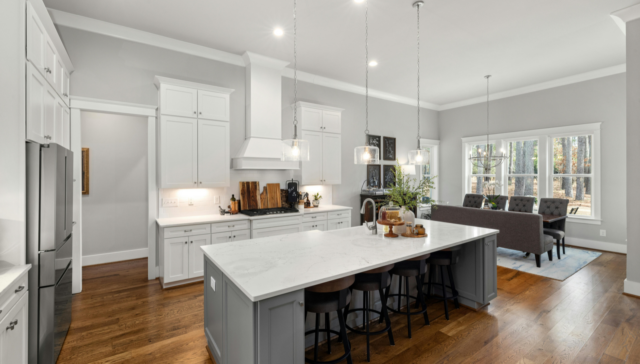
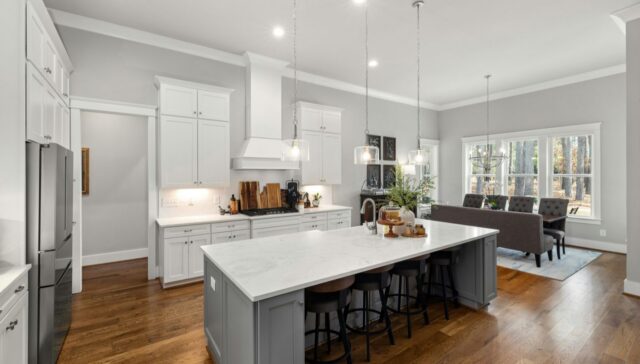
The perfect floor plan depends on the structure you are working with. L shaped kitchens are great for open spaces and flexibility, U shaped layouts maximize storage and efficiency, while galley kitchens work best in narrow areas with a strong linear flow. Open plan kitchens connect seamlessly with living spaces, while island layouts add both workspace and social interaction. The key is not choosing what looks good, but what fits your space and supports how you move inside it.
Plan Functional Zones Instead of Just Placement
Instead of randomly placing appliances, we design kitchens in zones. Prep zones need clear counter space and access to knives and ingredients, cooking zones should have everything required within arm’s reach, and cleaning zones must be efficient and not interrupt the flow. Storage zones are placed based on usage frequency, daily items close, rarely used items higher or deeper. When each zone is clearly defined, the kitchen becomes intuitive to use without thinking.
Balance Storage, Counter Space, and Movement
A perfect kitchen floor plan is always a balance. Too much cabinetry can make the space feel tight, while too little storage creates clutter. We aim to maximize counter space where it matters most, especially near prep and cooking areas. Walkways should remain clear and comfortable, not cramped or oversized. Every decision, from cabinet depth to appliance size, should support both storage and movement without compromising either.
Integrate Lighting and Appliances Into the Plan Early
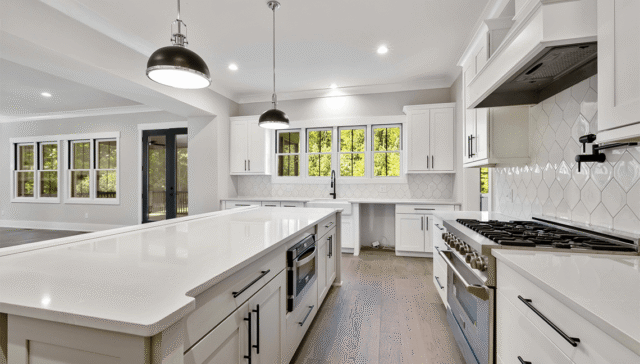
Lighting and appliances should never be an afterthought. Built-in appliances help maintain clean lines and reduce visual clutter, while proper lighting ensures every zone is usable at any time of day. Task lighting for prep areas, ambient lighting for overall visibility, and accent lighting to enhance the design all need to be planned from the beginning. When everything is integrated early, the final kitchen feels seamless, not pieced together.
Read more: